
Dual-Occupancy Mastery: Turning One Title into Two Income Streams in 2026
The Australian property landscape has shifted. In 2026, the “new normal” of sustained interest rates has forced investors to move beyond simple capital growth. To achieve financial resilience, the focus has pivoted toward high-yield assets. Dual-occupancy mastery is no longer just a niche tactic; it is the premier strategy for turning a single land title into two distinct income streams, effectively doubling your cash flow potential while mitigating vacancy risks.
Whether you are looking at a side-by-side duplex or a detached secondary dwelling, understanding the dual occupancy investment strategy is essential for navigating the current market. This guide provides a deep dive into how you can leverage multi-generational housing and granny flat rental yields to outpace inflation and build a high-performance portfolio.
See more: Property Investment Strategies That Work in Australia
Understanding the Dual Occupancy Investment Strategy
At its core, a dual occupancy development involves two self-contained dwellings situated on a single lot of land. Unlike a sub-division, where the land is legally split into two separate titles, a dual occupancy usually exists on one title (though “strata-titling” is an option in certain councils).
The Two Faces of Dual Occupancy
- Attached Dual Occupancy: Two dwellings that share a common wall, often referred to as a duplex. These are popular in suburban infill areas where land size is moderate.
- Detached Dual Occupancy: Two separate buildings on one lot. The most common example is the “house and granny flat” configuration.
In 2026, the demand for multi-generational housing investment has surged. Families are looking for ways to house aging parents or adult children, while investors are capitalizing on the ability to rent both dwellings to separate tenants, significantly increasing the gross rental yield compared to a standard house.
Why Dual Occupancy is the 2026 Cash Flow King
The “40% spike” in searches for dual occupancy isn’t accidental. It’s a mathematical response to the economic climate. When interest rates sit higher for longer, a traditional 3% or 4% yield often results in “negative gear” territory that many investors can no longer afford to carry.
Breaking Down the Granny Flat Rental Yield
A secondary dwelling, or granny flat, often provides the highest return on invested capital (ROIC). While a full renovation might cost $150,000, the additional rent generated can often cover the entire mortgage of the primary property.
| Investment Type | Avg. Yield (2026 Est.) | Risk Profile |
| Single Residential | 3.2% – 4.1% | Low |
| Dual Occupancy (Duplex) | 5.5% – 6.8% | Medium |
| House + Granny Flat | 6.2% – 7.5% | Low-Medium |
The Benefits of Multi-Generational Housing Investment
The social shift toward multi-generational living has created a “recessional floor” for investors. Even if the traditional rental market fluctuates, the demand for properties that can accommodate extended families remains high.
- Diversified Income: If one tenant moves out, you still have 50% of your income flowing from the second dwelling.
- Reduced Land Tax: Since both dwellings sit on one title, you often pay significantly less in land tax and council rates than you would for two separate properties on two titles.
- Manufactured Equity: Creating two dwellings on one lot often results in an immediate “uplift” in the total valuation of the property, providing equity for your next purchase.
Step-by-Step Framework for Executing a Dual Occupancy Project
Successfully turning one title into two income streams requires a disciplined approach to planning, local regulations, and construction.
1. Council Due Diligence and Zoning
Not every block is a candidate for dual occupancy. In Australia, zoning laws (such as R2 or R3 in NSW) dictate what can be built. You must check the Local Environmental Plan (LEP) and Development Control Plan (DCP).
- Minimum Lot Size: Most councils require a minimum area (e.g., 450sqm to 600sqm) for dual occupancy.
- Frontage Requirements: The width of your block at the street determines if you can build side-by-side or if you must go “tandem” (one behind the other).
2. Feasibility and “Highest and Best Use” Analysis
Run the numbers. Does the cost of construction ($250k–$450k for a duplex or $120k–$180k for a granny flat) justify the rental uplift? In 2026, construction costs remain a primary hurdle, so fixed-price contracts are non-negotiable for protecting your margins.
3. Design for Privacy and Autonomy
The secret to a high-yielding dual occupancy investment strategy is ensuring both tenants feel they have a private home.
- Separate entrances.
- Acoustic insulation in shared walls.
- Private outdoor spaces for both dwellings.
- Individually metered utilities (water, electricity, and gas).
4. Navigating the Approval Process
You generally have two paths:
- Development Application (DA): Lodged through the local council. It takes longer but allows for more “merit-based” customizations.
- Complying Development Certificate (CDC): A faster, “tick-the-box” approval process through a private certifier, provided your plans meet strict state-wide criteria.
Best Practices for Maximizing 2026 Rental Yields
To command top-tier rent in a competitive 2026 market, your dual occupancy must stand out.
- Smart Technology Integration: Include EV charging points in the garages and solar panels with battery storage. Tenants are increasingly willing to pay a premium for properties that lower their daily cost of living.
- Flexible Layouts: Design one of the rooms to function as a home office. With hybrid work now a permanent fixture, “work-from-home” capability is a major search filter for tenants.
- Low-Maintenance Landscaping: Use native Australian plants and artificial turf where appropriate to keep the property looking pristine without requiring constant tenant intervention.
[Image showing a modern duplex design with separate EV charging stations]
Common Pitfalls to Avoid in Dual Occupancy
Many investors fail because they treat a dual occupancy project like a standard renovation.
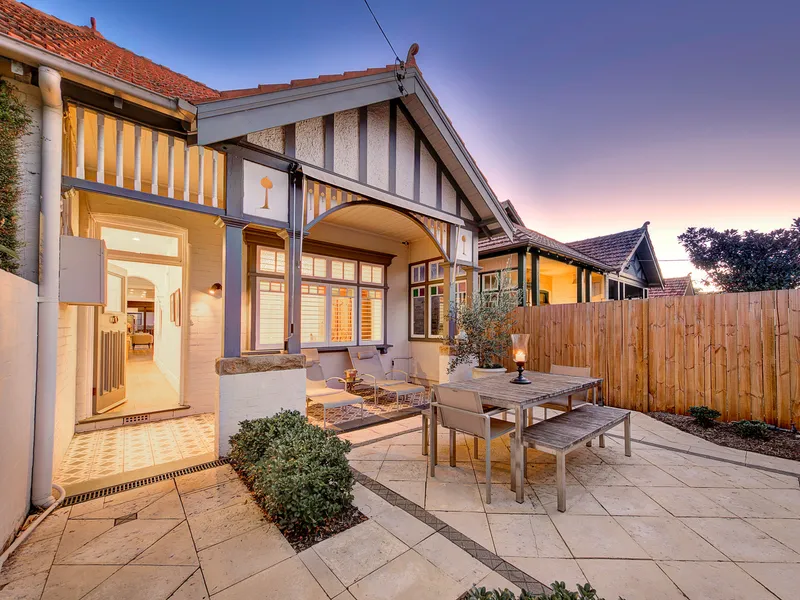
- Ignoring the “Character” of the Neighborhood: If you build a modern duplex in a street of heritage cottages, you may face stiff opposition from neighbors and council, leading to costly delays.
- Underestimating Infrastructure Costs: Connecting a second dwelling to the sewer, water, and electrical grid can cost tens of thousands in “contributions” and physical work.
- Over-Capitalizing: Don’t build a gold-plated secondary dwelling in a suburb where the median rent has a hard ceiling. Build for the demographic of the area.
Internal Linking & Resource Suggestions
To further your knowledge on property optimization, consider these internal topics:
- Optimizing site-wide internal linking for property portfolios
- Understanding NSW tree removal regulations for development sites
- The impact of E-E-A-T on real estate content authority
External Authoritative References:
- Refer to the Australian Bureau of Statistics (ABS) for current household composition trends and multi-generational living data.
- Consult the Planning Portal of your specific State Government for the most recent SEPP (State Environmental Planning Policy) updates regarding secondary dwellings.
Frequently Asked Questions (FAQ)
What is the difference between dual occupancy and a duplex?
A duplex is a specific type of dual occupancy where two dwellings are attached. “Dual occupancy” is a broader term that includes detached dwellings (like a house and a granny flat) on a single title.
Can I sell the two dwellings separately?
Only if the land is subdivided or strata-titled. In many “house and granny flat” setups, you cannot sell the granny flat separately; they must be sold together as a single-titled asset.
How much does a dual occupancy increase property value?
While results vary by suburb, a well-executed dual occupancy typically increases the total value by 20% to 40% above the original purchase price plus construction costs, depending on the “scarcity” of such housing in the local area.
Is a dual occupancy more expensive to build than a single house?
Per square meter, yes. You are essentially building two kitchens, two sets of bathrooms, and multiple utility connections, which increases the “wet area” costs significantly.
Are there specific tax benefits for dual occupancy?
Yes. You can generally claim depreciation on two separate dwellings, which can be a powerful tool for offsetting taxable income, especially with the higher construction costs seen in 2026.
Conclusion: Mastering the 2026 Market
The transition from a single-income property to a dual-income powerhouse is the most effective way to combat the rising costs of property ownership. By implementing a sophisticated dual occupancy investment strategy, you are not just buying a house; you are building a resilient cash-flow engine.
As we navigate the complexities of 2026, the winners will be those who can maximize the utility of every square meter of land they own. Whether through a sleek new duplex or a high-spec granny flat, the path to financial independence is paved with two front doors.